Choosing the Right RV Power Inverter Size
Posted by Brands Hut on Sep 27th 2026
A campground pedestal can be unreliable, and a generator is not always the right answer for a quiet morning or an overnight stop. An RV power inverter turns battery-stored DC electricity into household-style AC power, allowing you to run selected 120V appliances without shore power. The key is choosing a system that matches your actual loads, battery bank, wiring, and travel habits instead of simply buying the highest-wattage model available.
For many RV owners, an inverter is a practical upgrade for charging electronics, running a coffee maker, powering a television, or using small kitchen appliances. For others, especially full-timers and boondockers, it becomes part of a larger electrical system with lithium batteries, solar charging, a generator, and an automatic transfer setup. The right equipment depends on where and how you camp.
What an RV Power Inverter Does
Your RV batteries supply direct current, usually 12V DC in most travel trailers, fifth wheels, and motorhomes. Most household appliances need 120V alternating current. An inverter bridges that gap by converting battery power into usable AC power.
That does not mean an inverter creates power. It only uses the energy already stored in your battery bank. A large inverter paired with a small battery bank can drain the batteries quickly, while an undersized inverter may shut down when an appliance starts. Proper sizing requires looking at the whole system.
An inverter is different from a converter. A converter changes 120V shore or generator power into 12V DC to operate RV circuits and recharge batteries. Some inverter/charger units combine both functions, charging the battery bank when AC power is available and inverting battery power when it is not.
Start With the Appliances You Actually Need
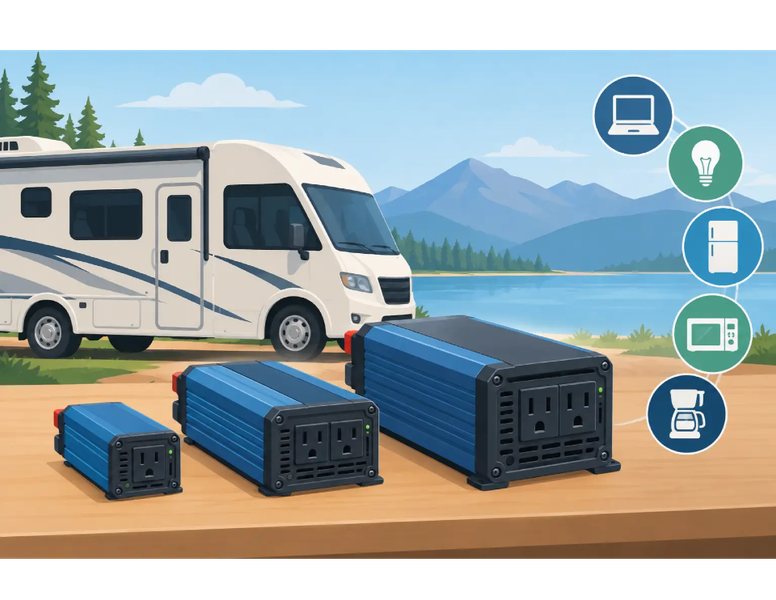
Before comparing models, make a realistic list of what you plan to operate from battery power. Phone chargers, laptops, a TV, CPAP machine, blender, microwave, coffee maker, and residential refrigerator all have different demands. Check the appliance label for wattage, or multiply volts by amps when only amperage is listed.
A 1,000-watt inverter may be plenty for light-duty use such as electronics, a TV, and a CPAP. A 2,000-watt pure sine wave inverter is a common choice for RV owners who want to run a coffee maker, toaster, small microwave, or several smaller items at once. A 3,000-watt unit can support more demanding loads, but it also needs heavier cabling, larger fusing, and a battery bank capable of supplying substantial current.
Pay attention to starting or surge wattage. Appliances with motors and compressors can require much more power at startup than during normal operation. A refrigerator, power tool, or small air compressor may run within an inverter’s continuous rating but still cause overload protection to trip when it first starts.
Do not assume an inverter will run your rooftop air conditioner. Most RV air conditioners require far more battery capacity than owners expect, even if the inverter can handle the starting load. A soft-start device can reduce startup demand, but extended air conditioner operation usually calls for a substantial lithium battery bank, high-output charging, and careful system design. In many cases, generator or shore power remains the practical choice.
Pure Sine Wave vs. Modified Sine Wave
Waveform matters. A pure sine wave inverter produces power that closely matches standard utility power. It is the preferred choice for sensitive electronics, modern televisions, CPAP machines, battery chargers, residential refrigerators, variable-speed appliances, and many RV appliances with electronic control boards.
Modified sine wave inverters can cost less and may operate basic resistive loads such as some lights or simple heating elements. However, they can make fans run hotter or noisier, interfere with audio equipment, cause chargers to perform poorly, and create problems with appliances that use sophisticated electronics.
For a replacement or upgrade intended to serve an RV for years, pure sine wave is usually the better value. The upfront cost is higher, but compatibility is broader and troubleshooting is less likely to become part of every trip.
Battery Capacity Determines How Long You Can Run
Inverter wattage tells you what can run. Battery capacity tells you how long it can run.
For example, a 1,000-watt appliance operating for one hour uses roughly 1,000 watt-hours of energy, plus inverter losses. A single 100 amp-hour 12V battery contains about 1,200 watt-hours in theory, but usable capacity varies widely by battery chemistry and battery condition. Lead-acid batteries should generally not be deeply discharged, while lithium batteries typically offer more usable capacity and more stable voltage under load.
High-wattage appliances drain batteries fast. A 1,500-watt hair dryer or electric kettle may be convenient for a few minutes, but repeated use can take a meaningful bite out of your available battery reserve. That is not necessarily a reason to avoid those appliances. It simply means your battery bank, charging plan, and expectations need to match.
Solar can help replenish batteries, but it is not an instant replacement for consumed energy. Panel output changes with weather, season, parking angle, shade, and available roof space. A generator remains valuable when you need to recharge quickly, run heavy loads, or camp through several low-sun days.
Installation Details Are Not Optional
A high-capacity RV power inverter can pull hundreds of amps from a 12V battery bank. That level of current requires correctly sized cables, secure battery connections, an appropriately rated fuse or circuit breaker, and a short cable run whenever possible. Undersized wiring creates voltage drop and heat, which can reduce inverter performance and create a serious safety concern.
The inverter should be installed in a clean, dry, ventilated location that is protected from road spray and battery gases. It should not be mounted directly inside an unventilated battery compartment unless the manufacturer specifically permits it. Inverters generate heat under load and need airflow to operate properly.
You also need a safe plan for distributing AC power. Some owners use a dedicated inverter outlet for a specific appliance. Others use an inverter subpanel to power selected circuits, such as entertainment outlets, bedroom receptacles, or a refrigerator. A transfer switch or properly designed inverter/charger installation prevents shore power and inverter power from feeding each other.
Because RV electrical systems combine high DC current, 120V AC power, and often generator or solar equipment, professional installation can be worthwhile for complex systems. If you are handling the work yourself, follow the inverter manufacturer’s instructions, RV electrical standards, and all applicable safety requirements. Exact cable gauge, fuse size, and installation layout should be based on the inverter model and the length of the DC cable run, not a generic online chart.
Features Worth Comparing Before You Buy
Beyond wattage, compare the features that affect daily use. A built-in battery charger is useful if you want one unit to manage charging and inversion. A remote control panel lets you monitor battery voltage and turn the inverter on or off without opening a storage compartment. Low-voltage shutdown helps protect batteries from excessive discharge, while overload and over-temperature protection can prevent equipment damage.
Look for a model with a continuous rating that fits your expected load, not just an impressive peak rating. Confirm the DC input voltage matches your battery system. Most RV systems are 12V, but larger motorhomes or custom solar installations may use 24V or 48V battery banks. Also verify whether the inverter provides a neutral-to-ground switching method appropriate for its intended installation, particularly when connecting it to RV AC circuits.
Recognizable manufacturers, complete specifications, and accessible support matter here. An inverter is not a one-size-fits-all accessory. Knowing your appliance loads, battery chemistry, battery capacity, and intended installation helps avoid a costly mismatch.
Choose for the Trips You Take Most Often
A modest inverter system can make weekend travel more comfortable without turning your RV into a complicated electrical project. A larger inverter/charger and lithium battery bank can support serious off-grid use, but it requires a larger budget and more planning. Neither approach is automatically better.
Start with the appliances you cannot comfortably go without, then build around those real needs. A well-matched inverter should make your RV more useful at the campsite, not leave you watching a battery monitor and wondering what you can safely turn on next.