Why Your RV Furnace Will Not Ignite in Cold Weather
Posted by Brands Hut on Aug 25th 2026
A cold RV at 5 a.m. makes every furnace click, fan sound, and failed ignition attempt feel urgent. When an RV furnace will not ignite, the problem is often a simple interruption in propane flow, 12-volt power, airflow, or one of the safety switches that prevents unsafe operation. The key is to diagnose the sequence instead of replacing parts at random.
When an RV Furnace Will Not Ignite, Start With Safety
Turn the thermostat off before inspecting the furnace. If you smell propane, shut off the LP gas at the tank, open doors and windows, avoid switches or open flames, and do not try another ignition cycle until the odor is gone and the system has been checked.
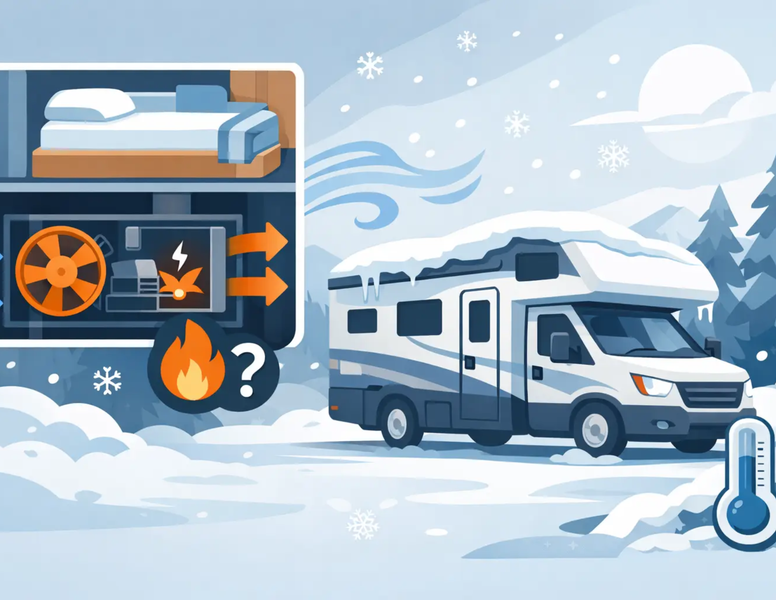
A typical RV forced-air furnace needs three things to happen in order: the thermostat calls for heat, the blower reaches operating speed, and the control board opens the gas valve while the igniter creates a spark. The furnace must then sense a stable flame. If any step fails, the board closes the gas valve and may try again before going into lockout.
That sequence gives you useful clues. A furnace that does nothing is different from one that blows cold air. A unit that clicks but never lights points to a different set of likely faults than one that lights briefly and shuts down.
Check Propane Before You Suspect the Furnace
An LP tank can show fuel on its gauge and still fail to deliver enough vapor for furnace operation. Cold weather reduces propane vapor pressure, especially when the tank is low. A partially closed tank valve, weak regulator, contaminated regulator vent, or restricted gas line can also limit flow.
First, confirm that the propane cylinder valve is fully open. Then try another propane appliance, such as the range burners. If the burners will not light or have an unusually weak flame, the furnace is probably not the first problem to solve. Check the tank level, regulator condition, and gas supply before working on furnace components.
If range burners light normally but the furnace will not, do not assume gas supply is perfect. The furnace needs a consistent gas volume while its blower is running. A marginal regulator may support a stove burner but struggle under the furnace's demand. Frost on the regulator or a damaged vent facing upward can be a warning sign. Regulator replacement should match the RV's LP system requirements and be followed by a proper leak test.
Confirm Battery Voltage and 12-Volt Connections
Your RV furnace may use propane for heat, but it depends heavily on 12-volt DC power. The blower motor, control board, thermostat, sail switch, gas valve, and ignition circuit all need stable voltage. Shore power does not automatically rule out a low-voltage issue if the converter is not charging correctly or the battery has a weak connection.
Check the house battery first. A battery can have enough voltage at rest to turn on lights yet drop too low once the furnace blower starts. Look for loose battery terminals, corrosion, a weak ground cable, a blown furnace fuse, or a tripped 12-volt breaker. Verify voltage at the furnace while it attempts to start if you are comfortable using a multimeter.
Low voltage often creates a misleading symptom: the blower runs, but not fast enough to close the sail switch. The control board then refuses to open the gas valve. If the blower sounds slow, labored, or changes pitch during startup, address the battery, wiring, or motor issue before replacing the igniter or control board.
Listen to the Startup Sequence
The sound your furnace makes is one of the fastest diagnostic tools available. Set the thermostat several degrees above room temperature and listen from outside near the furnace exhaust, then inside near the return-air grille.
If there is no response at all, verify the thermostat setting, battery disconnect position, furnace fuse, and power connections. Some thermostats use batteries, while others rely on the RV's 12-volt system. A loose thermostat wire or failed thermostat can prevent the furnace from receiving a heat call.
If the blower starts but you hear no clicking near the burner, the furnace may not be proving airflow. The sail switch is a small safety switch that closes only when the blower moves enough air. Restricted return air, blocked supply ducts, a dirty blower wheel, weak motor, or debris around the switch can keep it open. The high-limit switch may also interrupt operation if the furnace overheats.
If the blower runs and you hear clicking but there is no flame, focus on propane delivery, the gas valve, electrode condition, and burner assembly. If it lights for a few seconds and then goes out, the flame-sensing function may not be confirming the flame. On many RV furnaces, the electrode both sparks and proves flame, so soot, corrosion, cracked porcelain, poor wire connections, or incorrect electrode gap can cause this symptom.
Airflow Problems Are More Common Than They Look
RV furnace compartments collect dust, pet hair, road debris, and insect nests. A wasp nest at the exterior vent or inside the combustion intake can restrict airflow enough to prevent ignition or cause repeated shutdowns. Check the exterior furnace vent for mud dauber nests, leaves, snow, loose screen material, and damage. Never operate the furnace with the exterior exhaust obstructed.
Inside, make sure the return-air opening is not covered by bedding, storage bins, or rugs. Open and inspect accessible supply registers. Kinked or crushed ducting can reduce airflow and trigger a high-limit condition, particularly in units with long duct runs.
A furnace that starts normally but shuts down after several minutes may be overheating. The blower may continue running after the flame goes out, which is normal cooldown behavior. The underlying cause could be restricted airflow, a weak blower motor, failing limit switch, or duct issue. Repeated high-limit trips are not something to ignore, because continued cycling can damage other furnace components.
Inspect the Ignition and Burner Components Carefully
After shutting off propane and disconnecting 12-volt power, remove the furnace access panel only if the installation allows safe access. Look for loose wiring terminals, damaged electrode leads, soot around the burner, rust, insect debris, and signs of water intrusion. A clean burner area matters because the flame must travel properly across the burner and remain stable long enough for the board to sense it.
Do not enlarge burner openings or scrape aggressively at the electrode. The electrode position and gap are model-specific. A generic adjustment can create more problems than it fixes. Use the furnace model number from the data plate to identify the correct service information and replacement components.
Control boards and gas valves can fail, but they should be tested rather than guessed at. Replacing a board may seem like a quick answer when a furnace clicks without lighting, yet a bad ground, weak battery, dirty electrode, or open sail switch can produce nearly identical symptoms. Exact model compatibility matters with boards, igniters, motors, limit switches, and replacement furnaces.
Know When to Stop Troubleshooting
Basic checks such as confirming propane, battery condition, fuses, thermostat settings, and clear exterior vents are reasonable for many RV owners. Stop and contact a qualified RV technician if you find a damaged gas line, suspect a gas valve failure, see heavy soot, have recurring flame rollout, cannot verify safe operation after a repair, or continue to smell propane.
A furnace that locks out repeatedly is giving you a reason to investigate, not a reason to keep cycling it. Turn the thermostat off for a few minutes to reset many control boards, but do not run repeated restart attempts without correcting the cause. Unburned propane, overheating, and improper combustion are safety issues.
When replacement is the practical path, match the furnace by more than BTU rating. Confirm the manufacturer and model, cabinet dimensions, duct configuration, exhaust location, fuel type, voltage requirements, and thermostat compatibility. Brands Hut can help RV owners narrow down compatible furnace parts and replacement equipment using those specifications, which is far safer than ordering by appearance alone.
A failed furnace does not have to end a trip or turn into an expensive guessing game. Start with the startup sequence, check the basics in order, and let the symptoms tell you whether you need a battery connection, airflow repair, ignition component, propane-system service, or professional diagnosis.